There is a distinct kind of magic in loading a fresh roll of 36 exposures into your camera. You never entirely know where those frames will take you, or where you’ll be when you finally wind the leader back into the canister.
The Ilford factory—which is undoubtedly the UK’s greatest contribution to keeping analogue photography alive—is located just outside of Manchester. So, when I found myself back up North visiting the town where I grew up, it felt only right to load up a few frames of the profoundly versatile black-and-white workhorse: HP5+.
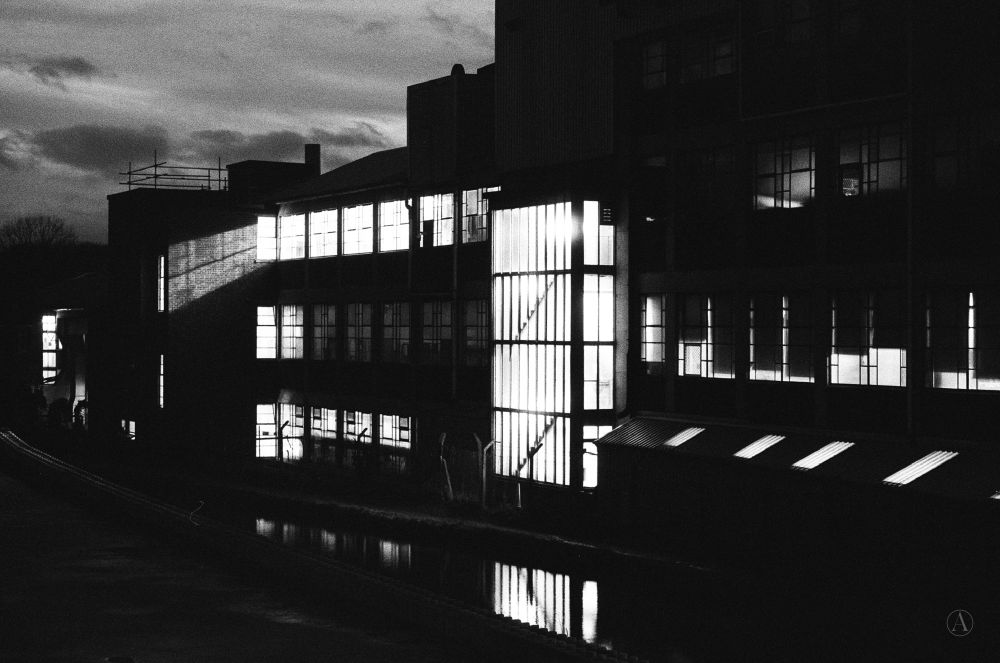
I’ve long wanted to test out the low-light performance while pushed one stop, so while wandering around Marple, I snapped a few frames of the iconic Swizzels sweet factory. There is something deeply nostalgic about shooting industrial Northern England on Ilford film; it just feels right.
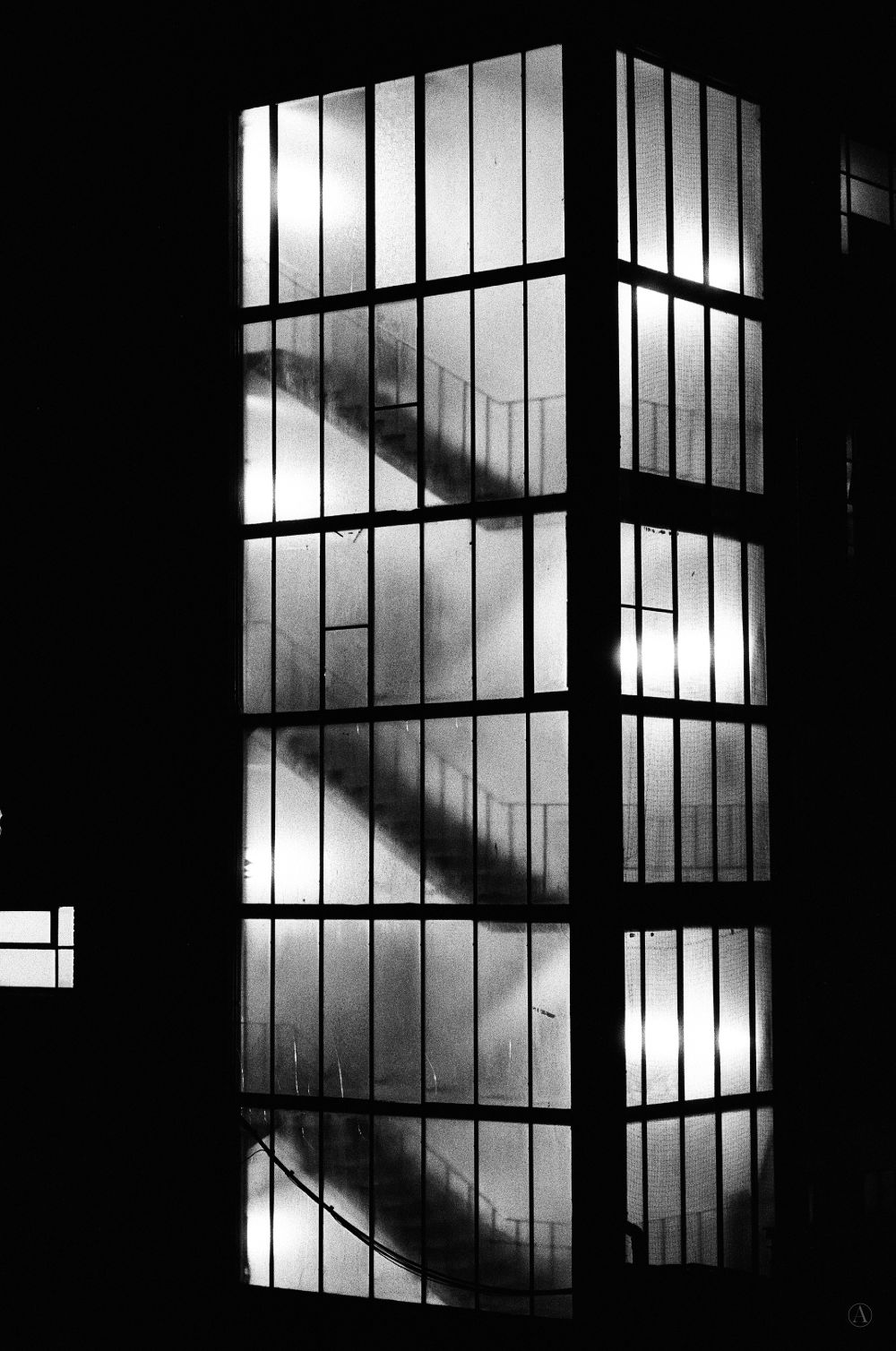
Ilford has an expansive, sometimes overwhelming range of film stocks available, and newcomers can easily struggle to pick the right one from the bunch. But if there is one staple you should always have sitting in your fridge, it’s HP5+. Why? Because of its versatility. It performs beautifully at its box speed of ISO 400, but it holds its own with grit and grace when pushed to ISO 800 or even 1600.
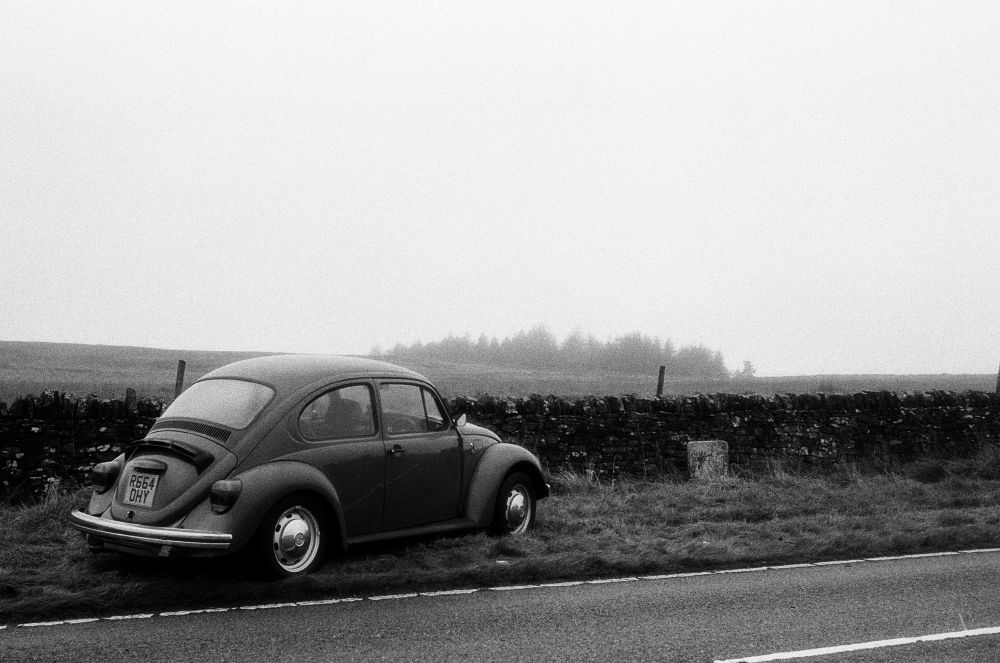
But a roll of film isn’t meant to stay still. A few days later, the scenery shifted entirely. Away from the industrial hum of Manchester, I found myself in the Peak District. The air was clearer, the roads were winding, and right there sat a classic VW Beetle perfectly framed against the rugged landscape. HP5+ eats up these textures, turning a simple car-on-a-road snapshot into something that feels timeless.
The Happy Accident
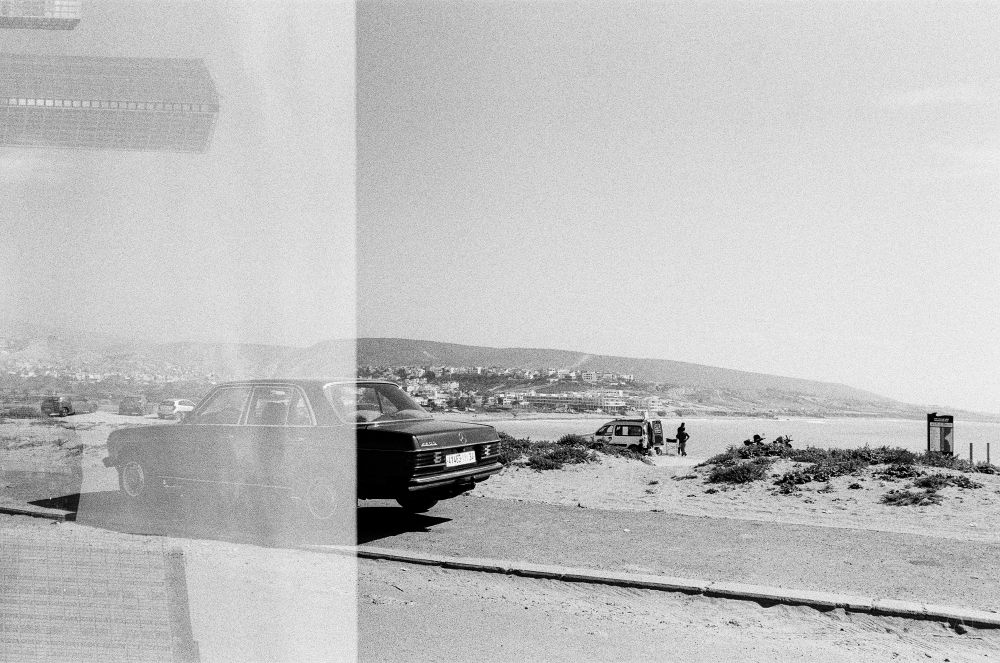
If you read our recent guide on travelling through airports with film, you’ll know the anxiety of the security scanner. Midway through this roll, it was time to fly. I did the classic trick: wound the film back, pulled the leader out post-security, and re-shot through the dark to catch up to my frame count.
The result? A completely unplannable, messy, and wonderful split frame. Half a Mercedes, half the streets of Manchester. It’s a literal, physical marker on the negative of the journey from point A to point B. You just don’t get these beautiful mistakes with a digital sensor.
The Other Happy Accident
When you think of Morocco, you usually think of explosive, vibrant colour: terracotta medinas, azure skies, and bright spices. Taking a black-and-white film like HP5+ to the North African coast feels almost counter-intuitive, but it forces you to look at the world differently. Instead of colour, you shoot for shadow, shape, texture, and emotion.
Just north of Agadir, the roll took on an entirely new life.
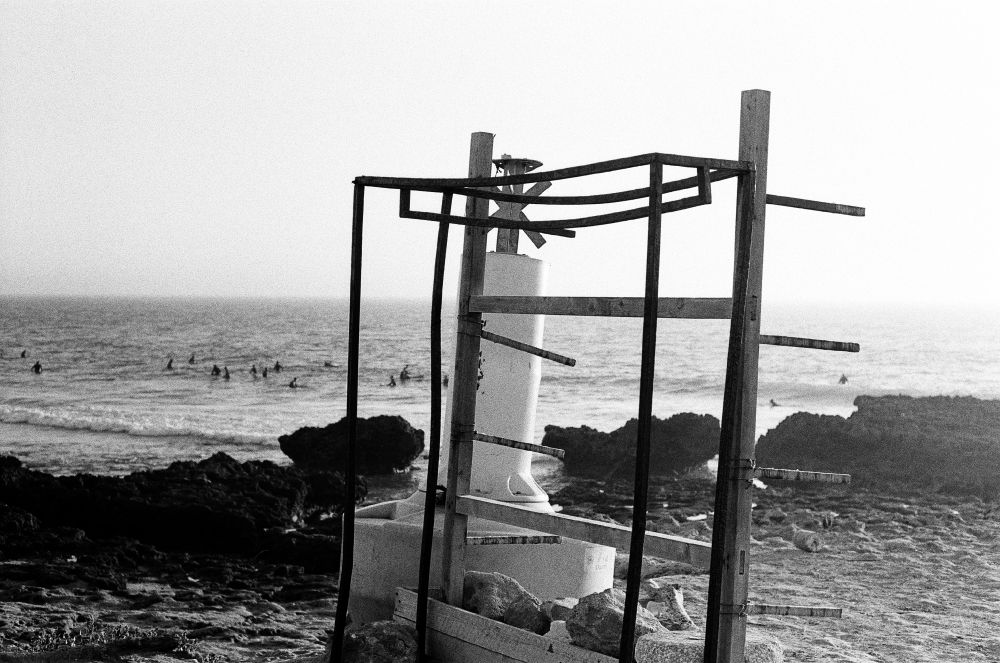
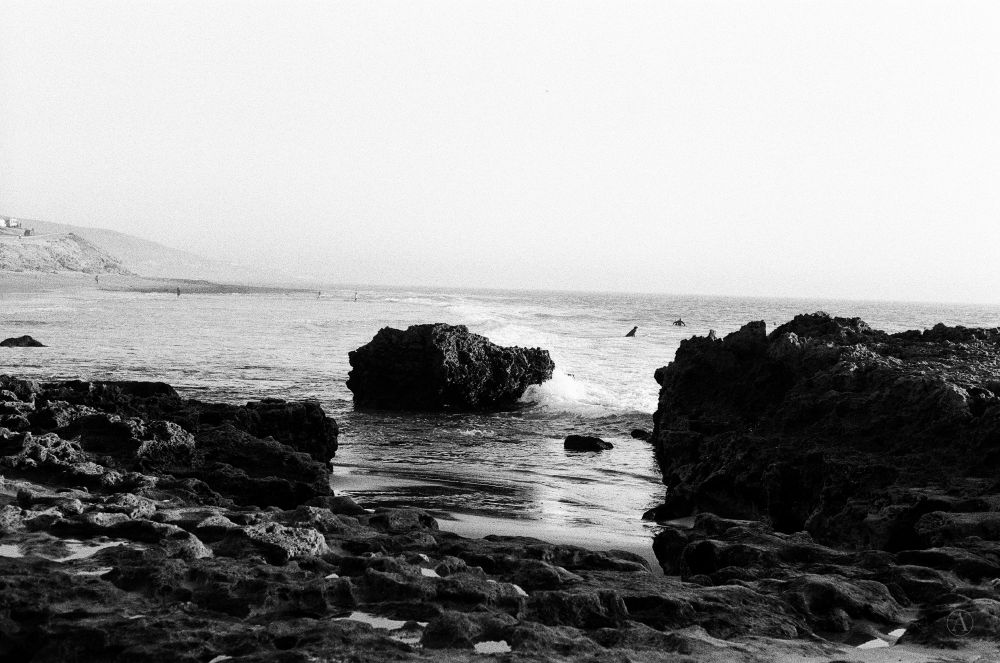
The crashing waves against the jagged rocks, the intense, unyielding sun beating down on the sand—the film captured the raw energy of the coastline. I spent time watching the local fishermen hauling their catches, the deep shadows of their silhouettes popping against backlit conditions of the sun setting over the Atlantic.
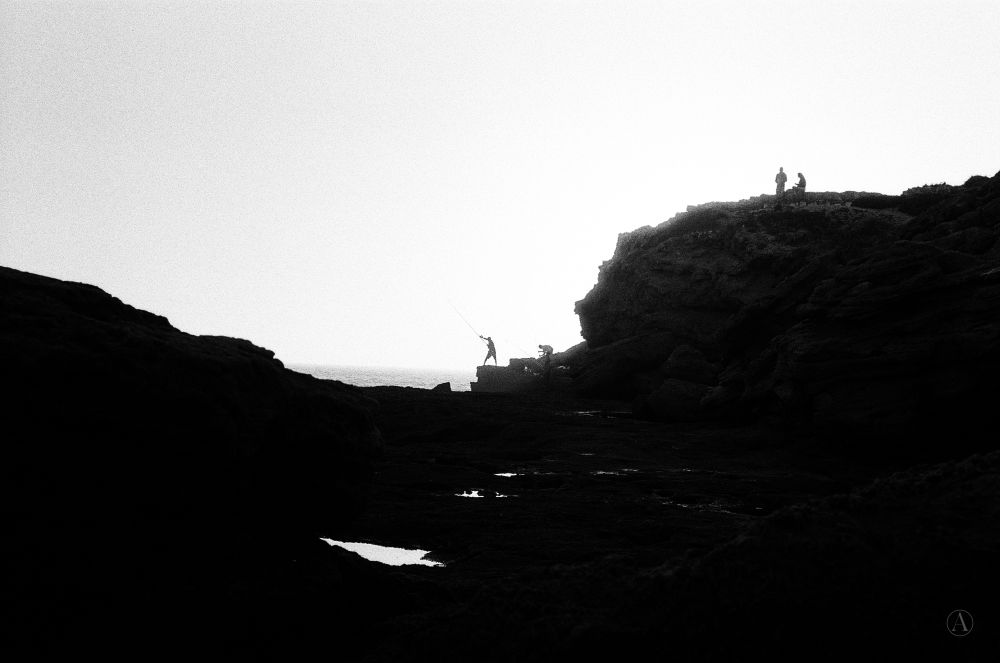
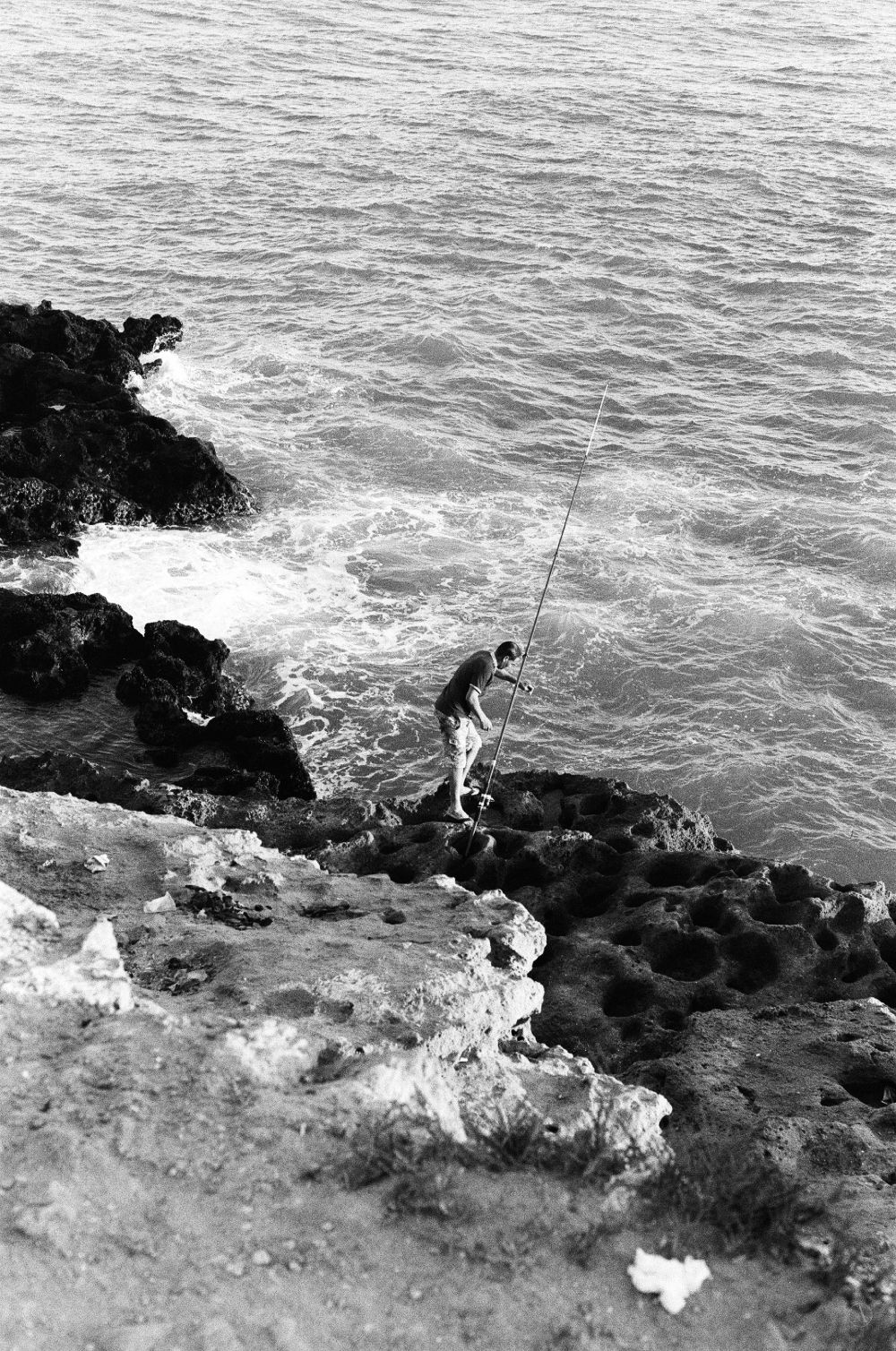
As the day wound down, so did the roll. One of the final frames on this spool of cellulose that started in rainy Manchester was of a couple quietly watching the sun dip below the horizon on a Moroccan beach.
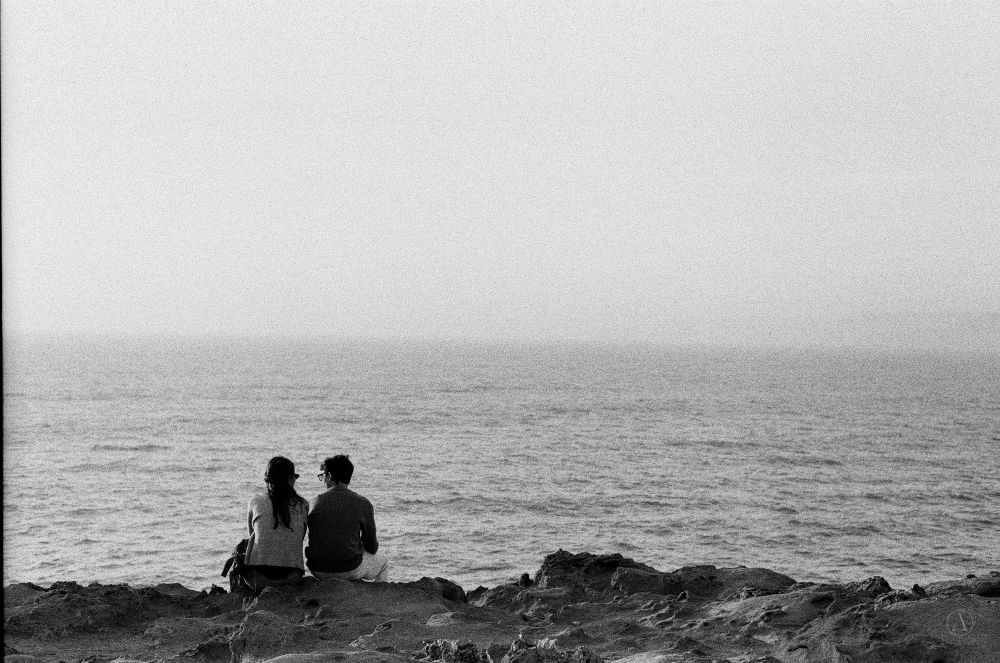
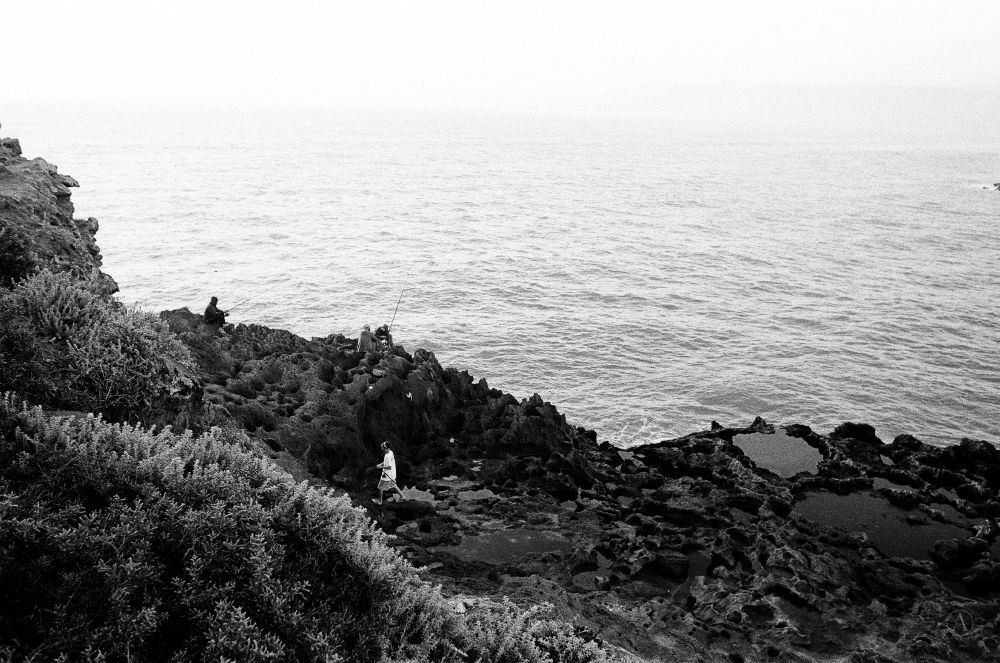
36 frames. That’s all we get. Even fewer are actually good photos worth presenting here. But when you look at a single roll from start to finish, it’s not just a collection of photos. It’s a timeline. From the sweet factories of the North to the sun-drenched beaches of Africa, HP5+ didn’t just record the trip—it became part of the journey. I wouldn’t have planned to shoot black and white in Morocco, and definitely not pushed one stop, but this is why I shoot film: organic mistakes can present beautiful outcomes.
| Camera: | Pentax MX |
| Lens: | SMC Pentax-A 50mm f/1.7, SMC Pentax-M 28mm f/3.5, SMC Pentax-M 75-150mm f/4 |
| Film Stock: | Ilford HP5+ (shot at +1 ISO 800) |
| Ethics: | No brand affiliation and not a sponsored article. Opinions are our own. |