You’ve seen it printed on a vintage watch dial. A small, proud number, often above the 6 o’clock position: “17 Jewels.” Or maybe “21 Jewels.” On a ’60s Waltham, you might even see a wild “100 Jewels.”
But what does it actually mean? What is a “jewel”? Is the Waltham leagues above even modern watchmaking? The explination, like most things in watchmaking, is a story of function, fashion, and marketing.
The Functional Jewel: A Tiny Ruby Bearing
First, let’s be clear: we are not talking about precious, glittering decorative gems.
A watch movement is a microscopic machine comprised of gears, springs, and levers. To keep time accurately, these components must pivot and rotate with minimal friction. The main enemy of a mechanical watch is friction, which leads to wear and a loss of energy (amplitude), ultimately ruining its accuracy and power reserve.
In early watchmaking, these pivot points were simply polished steel pins turning inside a hole in a brass plate. This metal-on-metal contact was a disaster. The brass would wear down, and the oils used for lubrication would gum up with microscopic metal dust, bringing the watch to a halt.
The solution, discovered in the early 1700s, was the jewel.
A watch jewel is a tiny bearing, traditionally made from natural ruby (and now, almost exclusively synthetic ruby, or corundum). This material is non-porous and incredibly hard—second only to diamond on the Mohs scale.
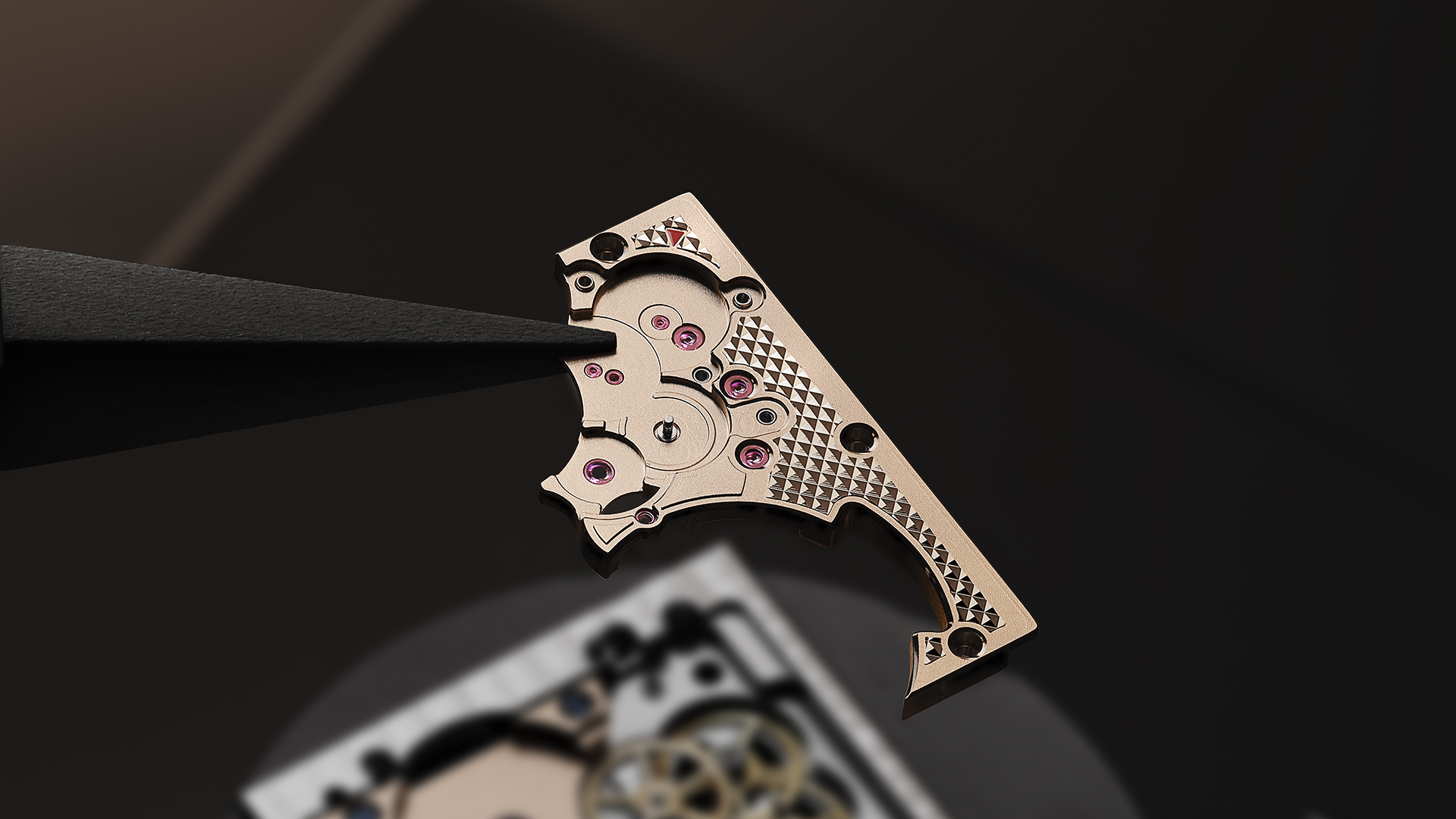 A macro shot of a JLC Reverso movement showing the jewels that allow the components to pivot with minimal friction.
A polished steel pivot turning inside a smooth ruby bearing has almost zero friction. It doesn’t wear down, and the tiny droplet of oil it holds will last for years without degrading.
Case Study: The Tudor 390
This isn’t just ancient, pocket watch history. We have a perfect example of this problem in a very famous wristwatch: the first Tudor Submariner. The Calibre 390 movement used in those early models was notorious for a specific flaw. Its automatic winding rotor was known to have a metal-on-metal contact point that, without meticulous service, would wear down. This wear created a fine, abrasive paste of metal and old oil that could contaminate the entire movement, causing damage throughout. It’s a perfect demonstration of why a tiny jewel can be so important to the lifespan of the entire watch.
The “Jewel Wars” & When More Was More
The function of jewels is simple: they are used at any point of high-friction, high-speed rotation. Does this mean more is better?
Welcome to the “Jewel Wars” of the 1950s and 60s.
As mass production made watches more accessible, brands needed a simple, obvious way to communicate quality to a public that didn’t know a balance wheel from an escape wheel. The jewel count became the perfect marketing tool.
The “Jewel Wars” began when brands started adding non-functional jewels. This practice kicked off a marketing arms race. Brands like Waltham famously released a “100 Jewels” watch, with Orient promoting its “Grand Prix 100” to take the lead in the “jewels competition.”
In reality, these movements often had the standard 17 or 21 functional jewels. The other 80+ were tiny, non-functional ruby chips, often studded in a ring on the winding rotor or pressed into the bridges for no reason other than to inflate the count on the dial. This practice got so bad that in 1974, the International Organization for Standardization (ISO) had to step in and define that only functional, friction-reducing jewels could be counted.
A simple, robust, hand-winding movement can be “fully jeweled” with 17 jewels. This is the standard, functional number:
- Balance Assembly: 7 jewels (for the balance staff, impulse pin, and shock protection)
- Pallet Fork: 2 jewels (the “pallets” that engage the escape wheel)
- Gear Train: 8 jewels (two for the escape wheel, third wheel, fourth wheel, and center wheel)
17 jewels. That’s it. That’s all you need for a high-quality, long-lasting manual watch. An automatic winding system might add another 4-8 functional jewels for the rotor, and a chronograph will add many more for its own set of gears, but those are all functional.
The 17-jewel movement became the industry standard for a “fully jeweled” manual watch. It’s not a low number; it’s the correct number.
Does Jewel Count Matter Today?
Yes, and no. There is a reason that on modern peices the jewel count is no longer printed on the dial.
Yes, it matters in the sense that a modern, quality movement must be sufficiently jeweled. A simple mechanical watch advertised with only “7 Jewels” is likely a low-quality, “pin-lever” movement where most of the gears are still running on metal. The 17-, 21-, or 25-jewel count in a modern watch from a brand like Nomos, Tudor, or Omega is a quiet confirmation that it’s built to last.
No, it doesn’t matter as a measure of superiority.
Today, the battle for quality has moved on. We no longer ask, “How many jewels?” We ask, “Is the movement in-house?” “What is the finishing like?” “Does it use a silicon hairspring?” “Is it a free-sprung balance?”.
The jewel count is a holdover from an analogue era. It’s a piece of history, a nod to a time when a tiny, functional ruby was the pinnacle of technology. Today, we should see it not as a spec to be boasted about, but as a quiet sign that the watch’s engine was built with the right materials, for the right reasons: to last a lifetime.
Footnote: The Zeitwork
So does that mean the high jewel counts are no more? The complex Jumping hours and minutes movement of the A. Lange & Söhne Zeitwerk Date features 70, just a look at the pure insanity of the Zeitwork movement below.
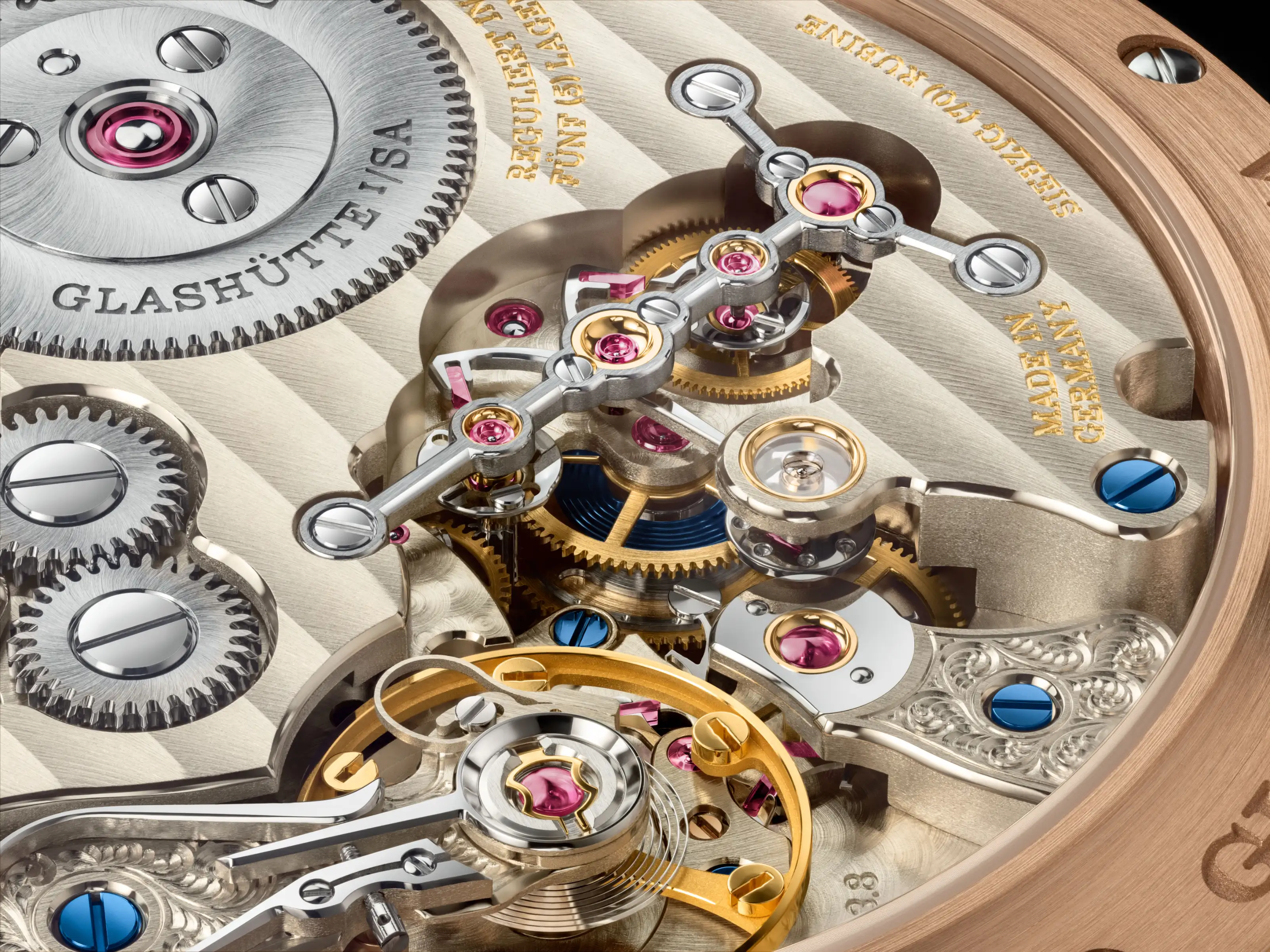 The balance, escapement and highly jewled geartrain of the Zeitwerk movement.
| Ethics: | No sponsorship involved. |
