When you think of Certina watches, you may think of the Swatch Group, Powermatic movements, and a turtle-adorned caseback. However, that does not do the brand justice. To explore where the brand came from, we need to go back way before the Swatch Group acquisition, back all the way to 1888.
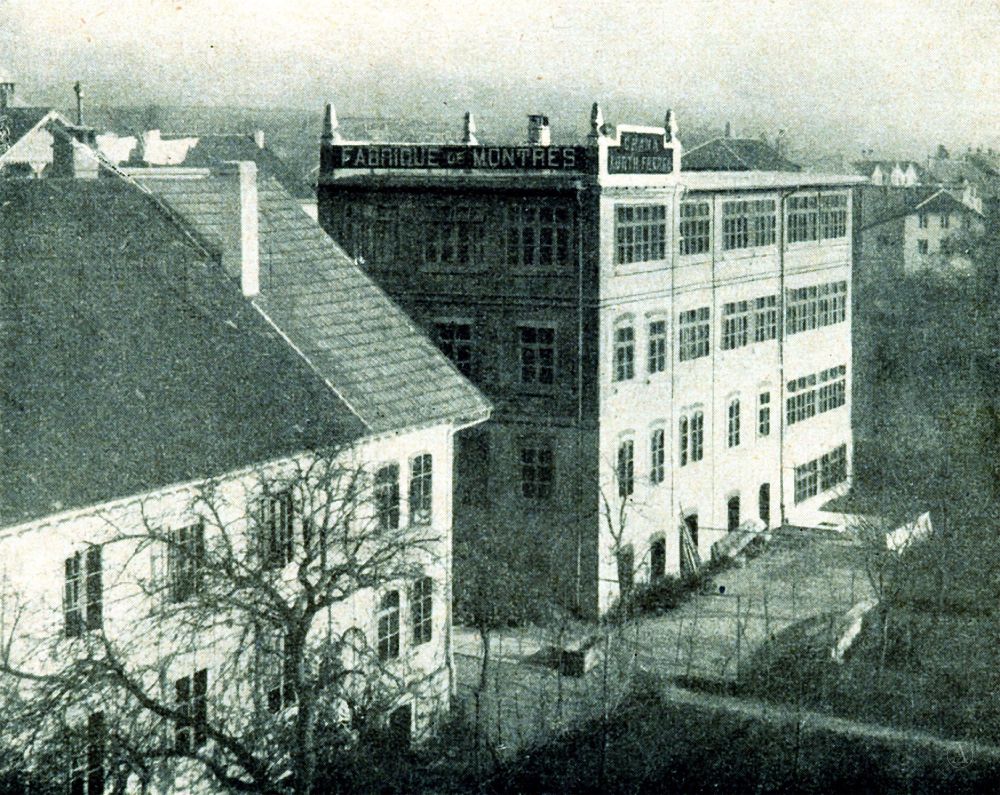
Deep in the Jura Mountains of Switzerland, two brothers, Adolf and Alfred Kurth, established a modest movement and horological supplies factory in an annex connected to their family home. Operating under the name Kurth Frères SA, the brothers manufactured high-quality blank movements (ébauches) and supplies for other established watchmaking houses for about two decades.
However, the brothers had ambitions to go further, and by 1906 the facility had expanded its capabilities to begin manufacturing complete watches. To brand these early timepieces, the Kurth brothers introduced the name “Grana”. This nomenclature was a direct homage to their geographical roots, representing a shortened form of Granacus (the Latin name for the town of Grenchen). At first, the brand focused on women’s wristwatches, as the contemporary male market still largely favoured pocket watches. The quality of Grana timepieces quickly garnered international recognition and several prestigious awards, cementing the factory’s reputation.
The Transition to “Certina” (1938–1955)
As the company entered the 1920s, Alfred Kurth’s sons, Erwin and Hans, integrated into the corporate leadership, helping to steer the enterprise through the economic devastation of the Great Depression. By 1938, the Grana factory celebrated its 50th anniversary, employing a workforce of 250 individuals.
Anticipating global expansion, the leadership recognised that “Grana” lacked international phonetic versatility. In 1939, the company officially registered the trademark “Certina”. The selection of this name was a deliberate statement; it was derived from the Latin word certus, translating to “assured,” “certain,” or “safe”.
The transition from a geographical identity to an ideological one underscored the brand’s commitment to reliability and precision. The rebrand was executed gradually. Until approximately 1953, the name “Certina” appeared on watch dials in a cursive, connected-letter script.
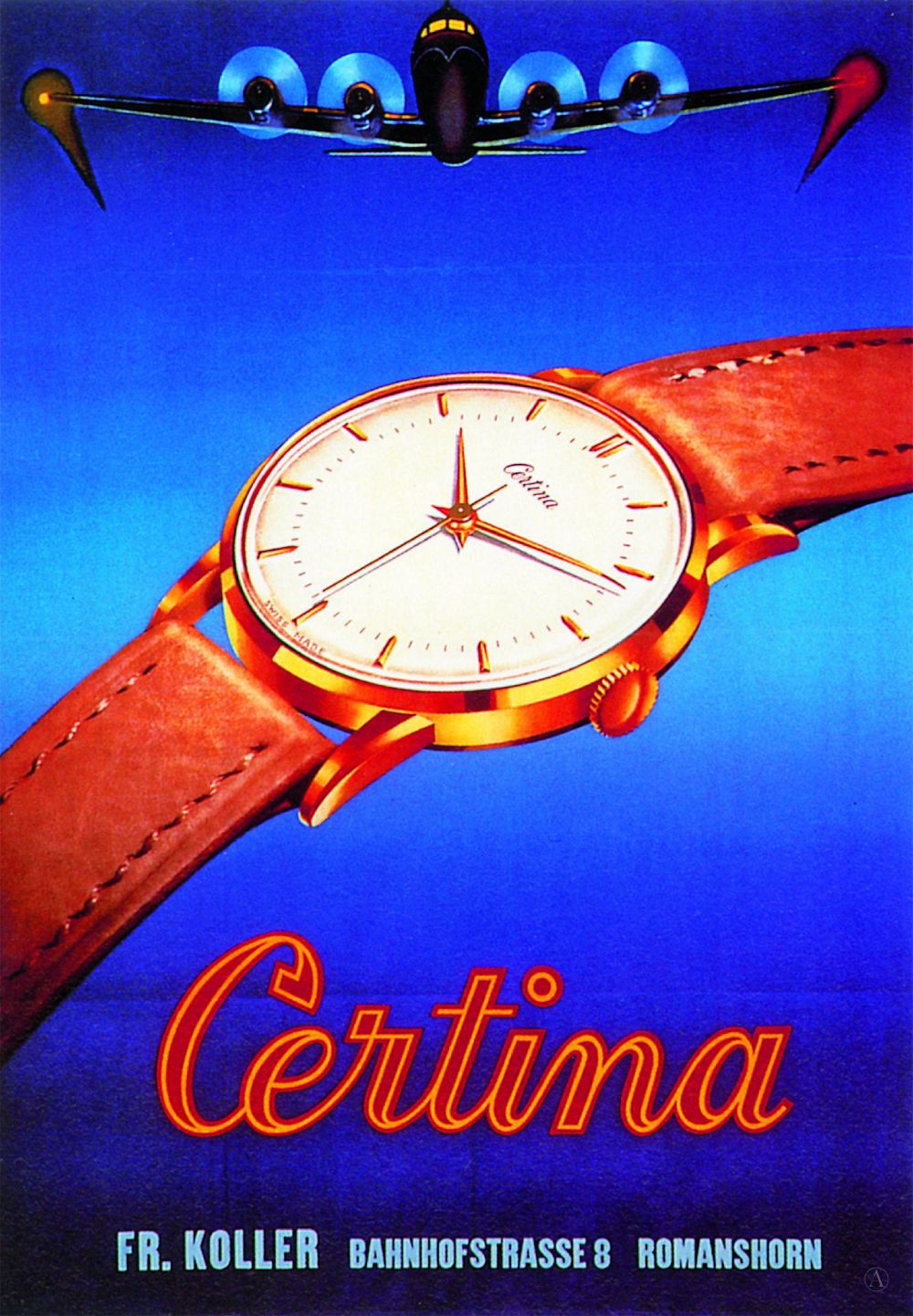
By 1954, the brand modernised its aesthetic, adopting the bold, block-letter typography that remains in use today.
In 1955, the corporate entity officially changed its name from Kurth Frères SA to Certina, Kurth Frères SA, possessing a workforce of 500 employees capable of producing 1,000 timepieces daily. This visual identity was further solidified in 1958 with the introduction of the trademark interlocking logo featuring two rotating “C” shapes nested within one another.
Developing the DS
Through the 1950s, watches were intrinsically sensitive to shock. Knocks and drops would cause internal damage resulting in frequent trips to the watchmaker. Watches of the period relied on localised shock absorption such as Incabloc, which served solely to protect the microscopic pivots of the balance staff.
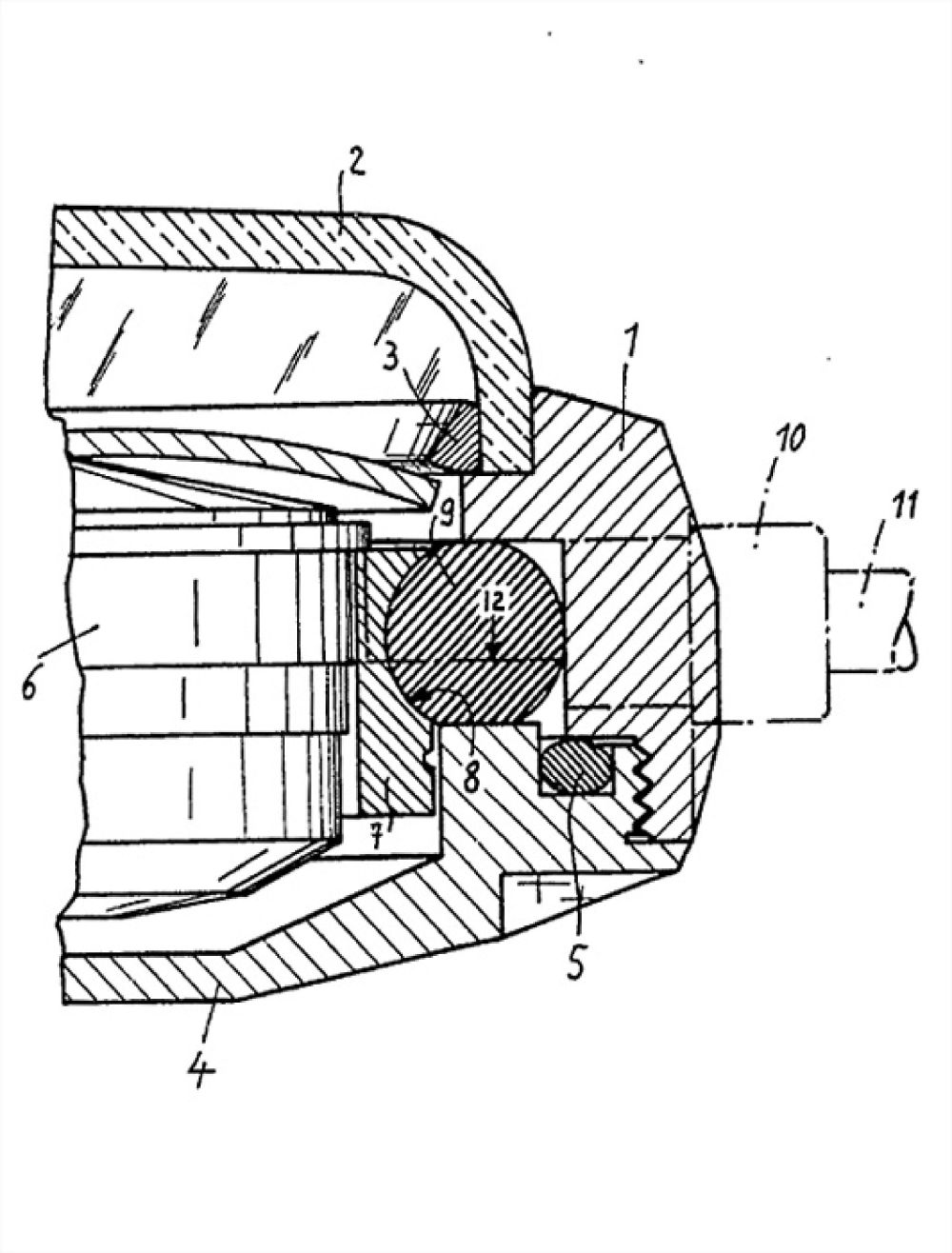
In 1959, Certina set about revolutionising shock absorption by developing a defence mechanism for the entire movement. They named the system DS or ‘double security’. The features of the 1959 DS concept were:
- Elastomeric Suspension: Rather than relying solely on the Incabloc pivot jewel springs, the entire mechanical movement was suspended and floated within an elastic, shock-absorbing ring manufactured from synthetic rubber.
- Kinetic Air Gap: The engineering team designed an intentional air gap between the outer perimeter of the dial and the inner walls of the steel case. Upon severe impact, this void permitted the entire movement and dial assembly to oscillate dynamically in all directions, safely dissipating kinetic energy before it could fracture delicate gear trains.
- Reinforced Vaulting: The delicate internal suspension was shielded by an extra-thick, sheathed Plexiglass crystal, a heavily reinforced caseback, and specialised dual O-ring gaskets sealing the winding stem and crown.
The results of this over-engineering were staggering for the era. While standard contemporary self-winding watches could generally survive a drop from approximately 1.8 to 2.2 meters, the Certina DS was rated to withstand impacts from 6 meters. Concurrently, the enhanced sealing system granted the elegant dress watch an exceptional water resistance rating of 200 meters (20 atmospheres), a metric previously reserved for diving instruments.
While the design is historically credited to Kurth’s internal team, archival records indicate that the shock mount patent (Swiss Patent 346825) was officially registered on May 8, 1958, by the prestigious case-manufacturing firm Huguenin Frères, a specialised case fabricator who collaborated with Certina.
The Certina Turtle Emblem
To advertise the hidden internal technological leap of the ingenious internal shock system, Certina started stamping the turtle emblem deep into the caseback of its timepieces. The turtle served as a visual metaphor for an impenetrable housing that guaranteed longevity and aquatic survival.
The application of this emblem evolved chronologically. The very first generation of 1959 DS watches featured entirely flat casebacks; early specimens were merely engraved with “Patent Pending,” while subsequent early models bore the Huguenin Frères patent number “346825”. By late 1960, the turtle emblem was introduced in two distinct formats: manual-wind DS models received a relatively flat turtle engraving, while automatic variants were adorned with a deeply machined, three-dimensional turtle surrounded by a relief wave pattern.
The Dhaulagiri Himalayan Expedition (1960)
Just months after its commercial release, the DS system was put to the test. On May 13, 1960, a Swiss mountaineering expedition, commanded by Max Eiselin, achieved the first successful summit of Dhaulagiri in the Himalayas (8,167 meters). At the time, Dhaulagiri was the second-to-last unclimbed eight-thousander peak on the globe.
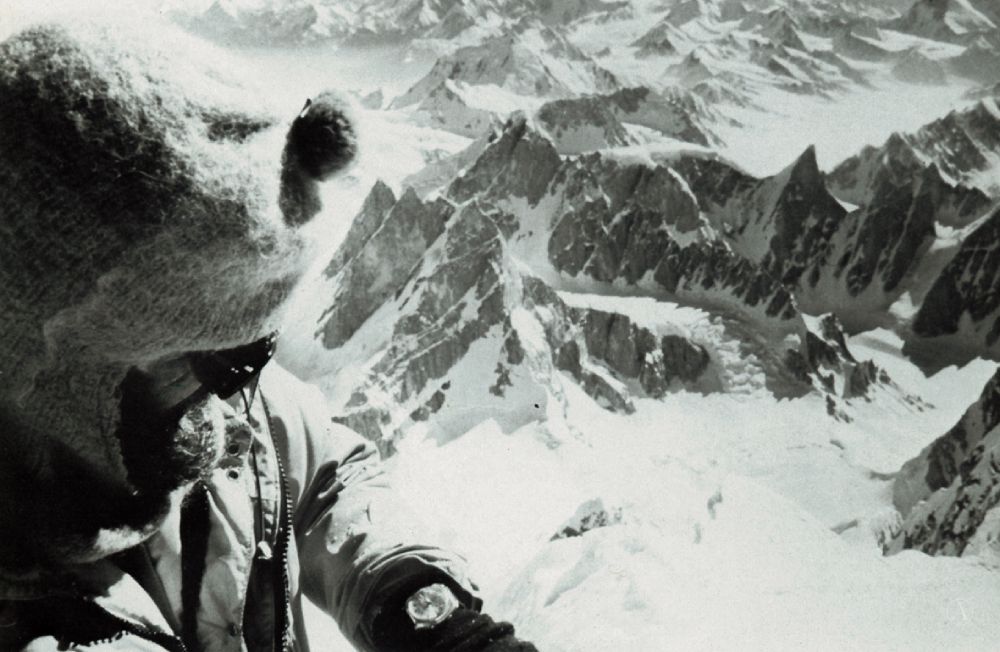
The entire expeditionary team was equipped exclusively with Certina DS Automatic timepieces (specifically Reference 5601 003 with date complications, mounted on Gay Frères steel bracelets). The watches held the caseback engraving “Schweizer Himalaya Expedition 1960”. Throughout the expedition, the Certinas were subjected to repeated impacts against glacial ice and extreme temperature and pressure drops; yet as the ultimate proof of concept, the floating DS mechanics continued to operate flawlessly.
Following this success, Certina watches were subsequently selected for Eiselin’s 1963 expedition to the Hindu Kush mountains, explicitly listed as essential survival equipment in his operational logs.
“The Man Who Skied Down Everest” (1970)
In 1970, Japanese extreme skier and alpinist Yuichiro Miura executed a highly publicised expedition to Mount Everest. After reaching an altitude of 7,986 meters at the South Col, the rather crazy Miura strapped on skis to descend the sheer icy face of the mountain.
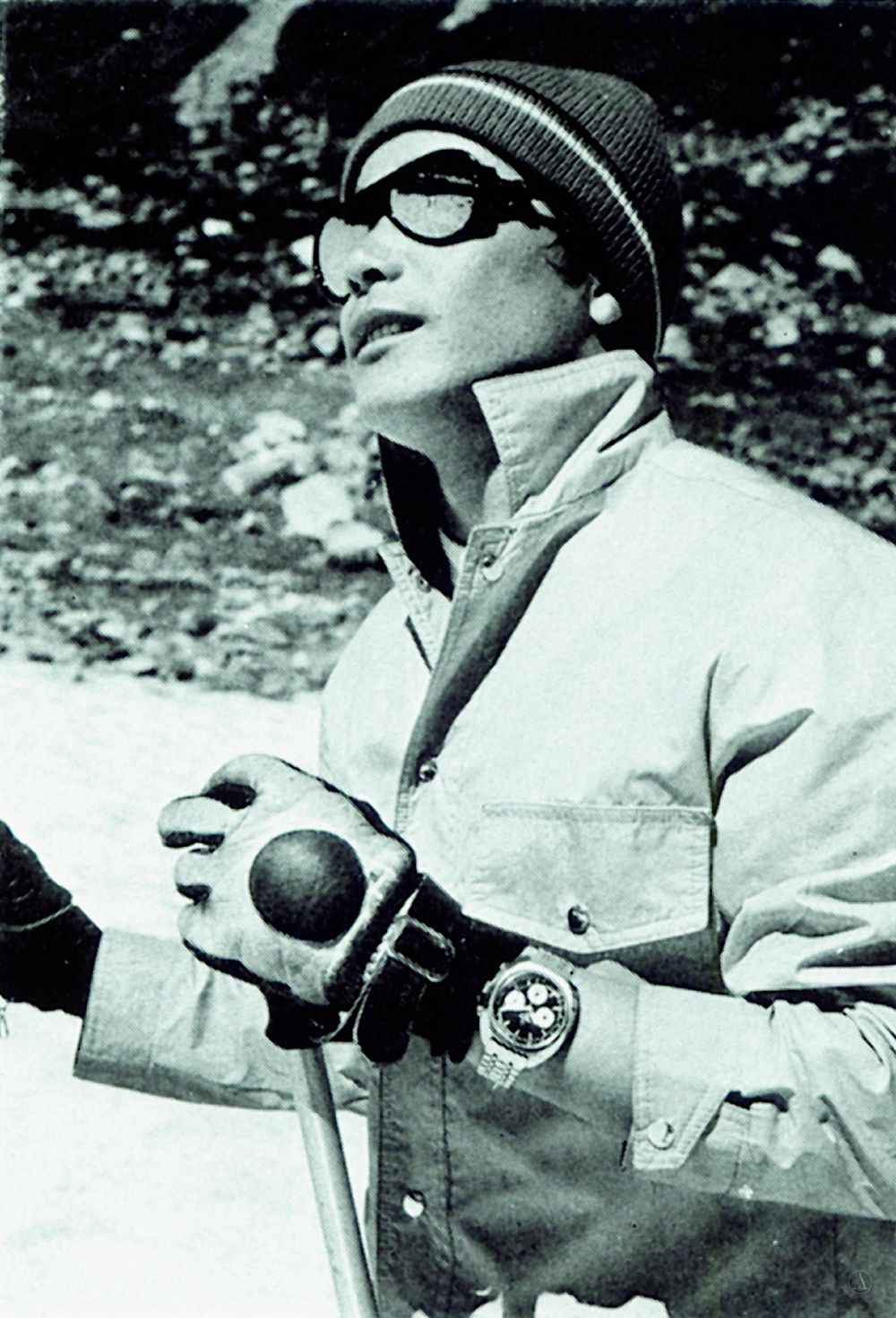
During the descent, Miura accelerated to speeds of up to 160 km/h. After 2 minutes and 20 seconds, having plummeted 2,000 vertical meters, he lost control on a massive ice patch, violently tumbling and sliding hundreds of meters before coming to a halt.
Throughout this extreme expedition, Miura was wearing a Certina DS-2 Chronolympic chronograph (Reference 8501 800). The mechanical chronograph survived the impact and functioned flawlessly post-crash, a testament to the DS architecture.
This harrowing event was such an incredible story that it was made into a documentary: The Man Who Skied Down Everest.
Royal Australian Navy Clearance Divers (1970s)
Certina’s unique shock absorption was also sought out for military applications. Around 1970, the Royal Australian Navy (RAN) sought a mechanical timing instrument for its elite Clearance Diving teams. The operational focus of RAN Clearance Divers was Explosive Ordnance Disposal (EOD): the disarming of naval mines and explosives in volatile coastal and deep-sea environments.
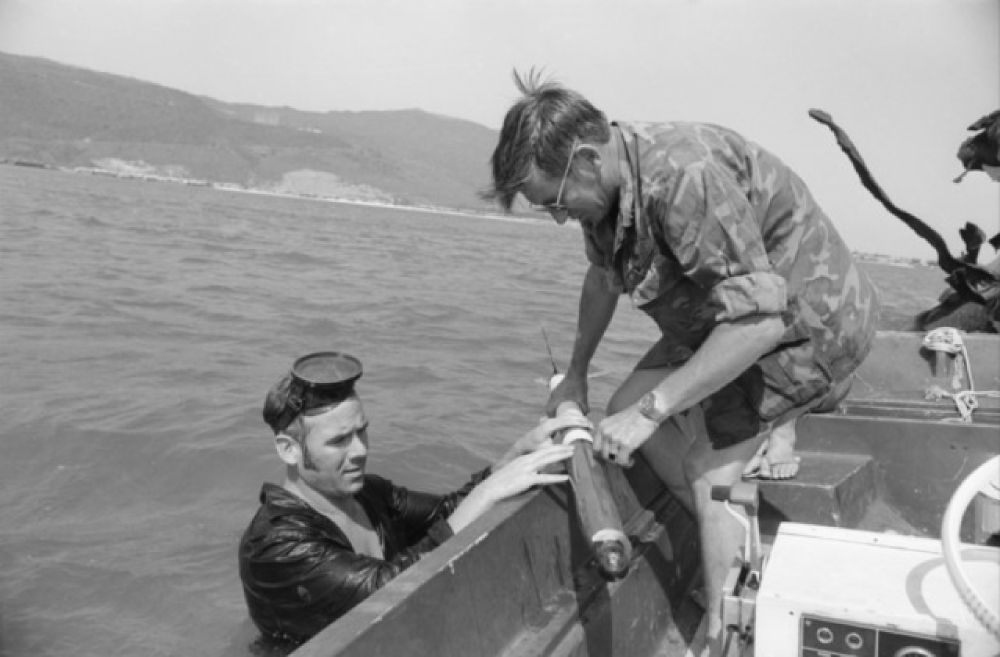
To survive the concussive forces of underwater demolitions, the RAN issued the Certina DS-3 Super PH1000M. This model featured a massive, over-engineered 43mm x 46mm cushion case that was an astonishing 18mm thick, guaranteeing a 1,000-meter depth rating. These military-issued variants are considered the pinnacle of vintage Certina collecting, identifiable by the official National Stock Number (NSN) deeply engraved into the caseback by the Australian military.
The Quartz Crisis
Despite achieving massive scale and producing 600,000 watches annually by 1972, Certina was not immune to the devastation of the Quartz Crisis. The influx of high-accuracy, inexpensive battery-powered watches from Japan threatened the survival of every Swiss watch brand.
To consolidate resources and survive the economic turbulence, the Kurth family opted in 1971 to integrate Certina into the General Watch Co. (GWC), a newly established sub-holding of the ASUAG conglomerate. This restructuring necessitated sacrifices, including the abandonment of Certina’s celebrated in-house calibre manufacturing. Furthermore, production operations were relocated to Biel/Bienne to merge alongside brands like Edox and Technos.
Later in 1983, following the merger of the SSIH and ASUAG entities, Certina became a member of the SMH Group, which would eventually be renamed The Swatch Group.
Modern Certina
Swatch Group strategists positioned the brand within the “middle range” segment, operating alongside Tissot, Mido, and Hamilton.
Within this corporate ecosystem, Certina was explicitly designated as the group’s extreme-sports and rugged heritage specialist, leveraging Swatch Group’s massive industrial ETA movement infrastructure to deliver historically accurate, high-specification tool watches at competitive prices.
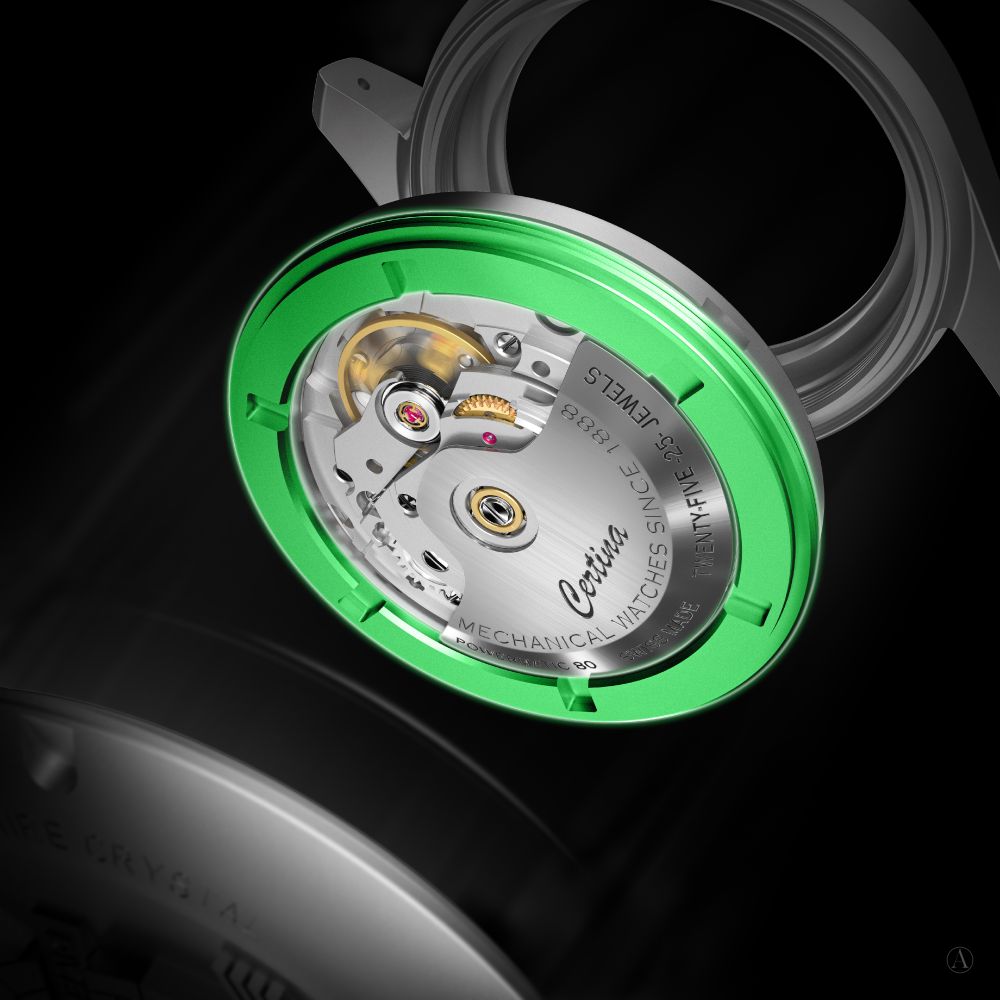
Swatch Group engineers have continued to refine the historic DS concept further. In modern iterations after 2025, such as the DS Action Diver series, the synthetic rubber ring has been augmented by three upgrades:
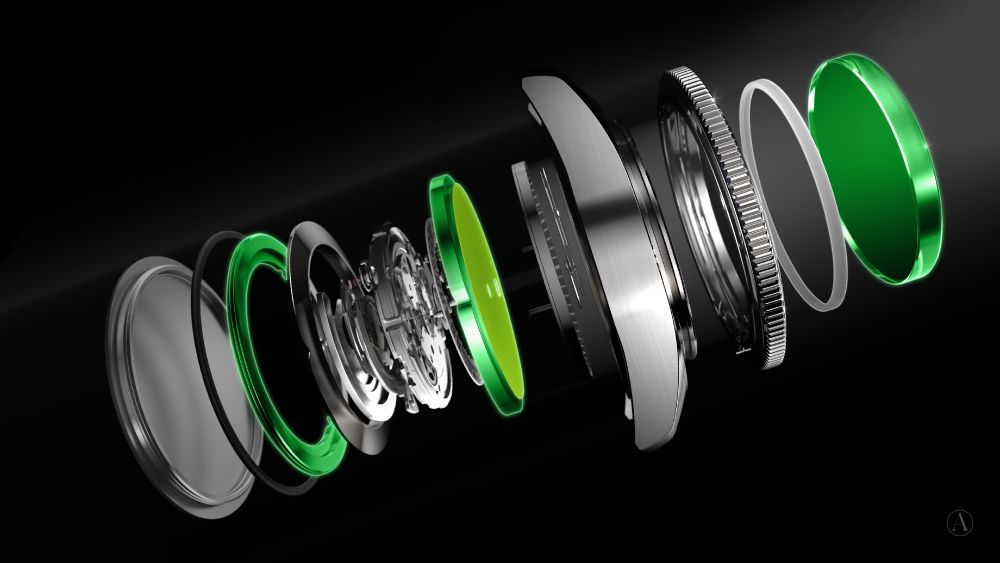
- A thin, ring-shaped nut that screws the movement tightly into the case, mitigating vibration.
- A thin metal stability plate inserted between the movement and the dial, preventing dial deformation during impacts.
- A re-engineered sapphire crystal designed to distribute concussive forces evenly across the watch’s geometry.
According to brand documentation, this modernised DS architecture successfully survived testing on machinery capable of delivering 10,000 Gs of impact force, ultimately breaking the testing apparatus itself during development.
I particularly like the way the ring-shaped nut ‘screws down’ the movement akin to the way a caseback screws down; it feels like a sophisticated and elegant way of securing the movement rather than the industry-standard movement tabs.
Editor’s Note
The DS standard offers a sophisticated internal architecture even to this day. With several brands using the same Powermatic movement, sometimes it feels like the watches are merely separated by branding; however, it is a breath of fresh air to see that with Certina, it is still the engineering that separates them from the different arms of the Swatch Group.
In my opinion, this makes watches that utilise the DS standard collectable for their uniqueness, both the old and new 2025 standard. For those interested in mountaineering, exploration or extreme sports, Certina offers watches that have genuine heritage and are tough through and through.
| Photography: | Images provided by Certina SA for reporting purposes. |
| Ethics: | No brand affiliation and this is not a sponsored article. Opinions are of our writers. |
