There is a specific, heavy humidity that hangs over Lake Como in late May. For automotive enthusiasts, this narrow strip of Italian shoreline becomes the centre of the universe for one weekend a year. But if you were lucky enough to step off a Riva speedboat onto the docks this past weekend, you would find a fascinating split in the automotive psyche.
It has just been Como Car Week, and the legendary Concorso d’Eleganza Villa d’Este returned as the establishment—a bastion of bespoke tailoring, sweeping pre-war French coachwork, and the fiery emotionalism of Italian V12s. It is steeped in velvet-roped exclusivity and unparalleled elegance. But a few miles away, across the manicured lawns of Villa del Grumello and Villa Sucota, a very different kind of celebration was taking place.
This May, FuoriConcorso returned to the shores of Lake Como with a distinctly Teutonic twist: KraftMeister. Leaving behind the flamboyant romance of Italian design from previous years, the 2026 edition was a curated celebration of ultimate German engineering—a space where discipline, performance, and uncompromising functionality took centre stage.
If Villa d’Este is a black-tie gala, FuoriConcorso is a garden party for the driver.
The Half-Billion Dollar Garden
The most striking thing about FuoriConcorso is its ability to casually display over half a billion dollars’ worth of automotive history while remaining effortlessly approachable.
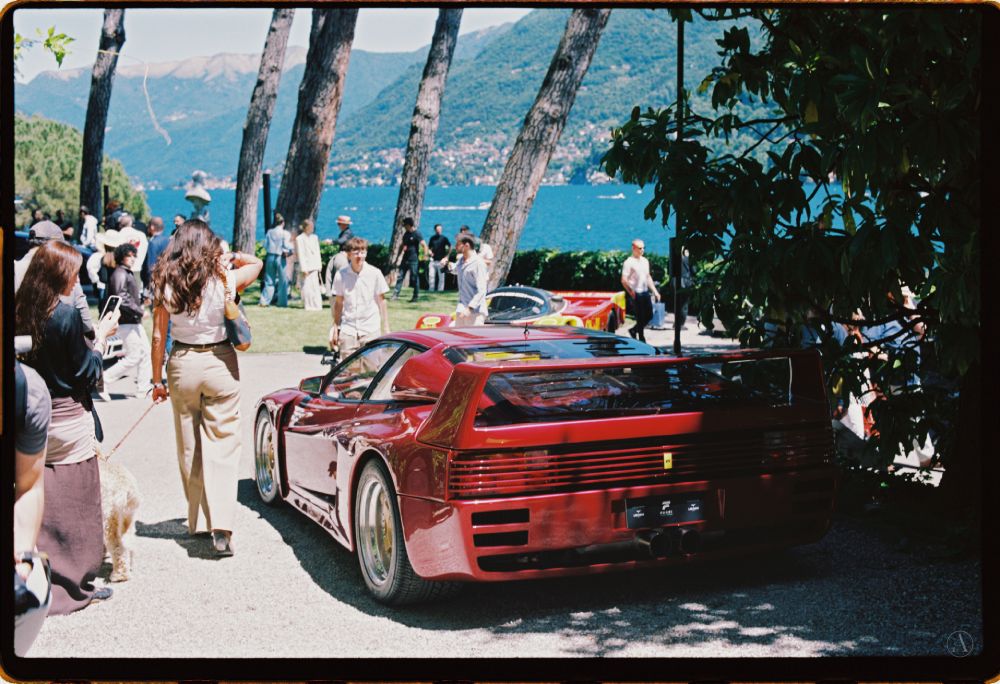
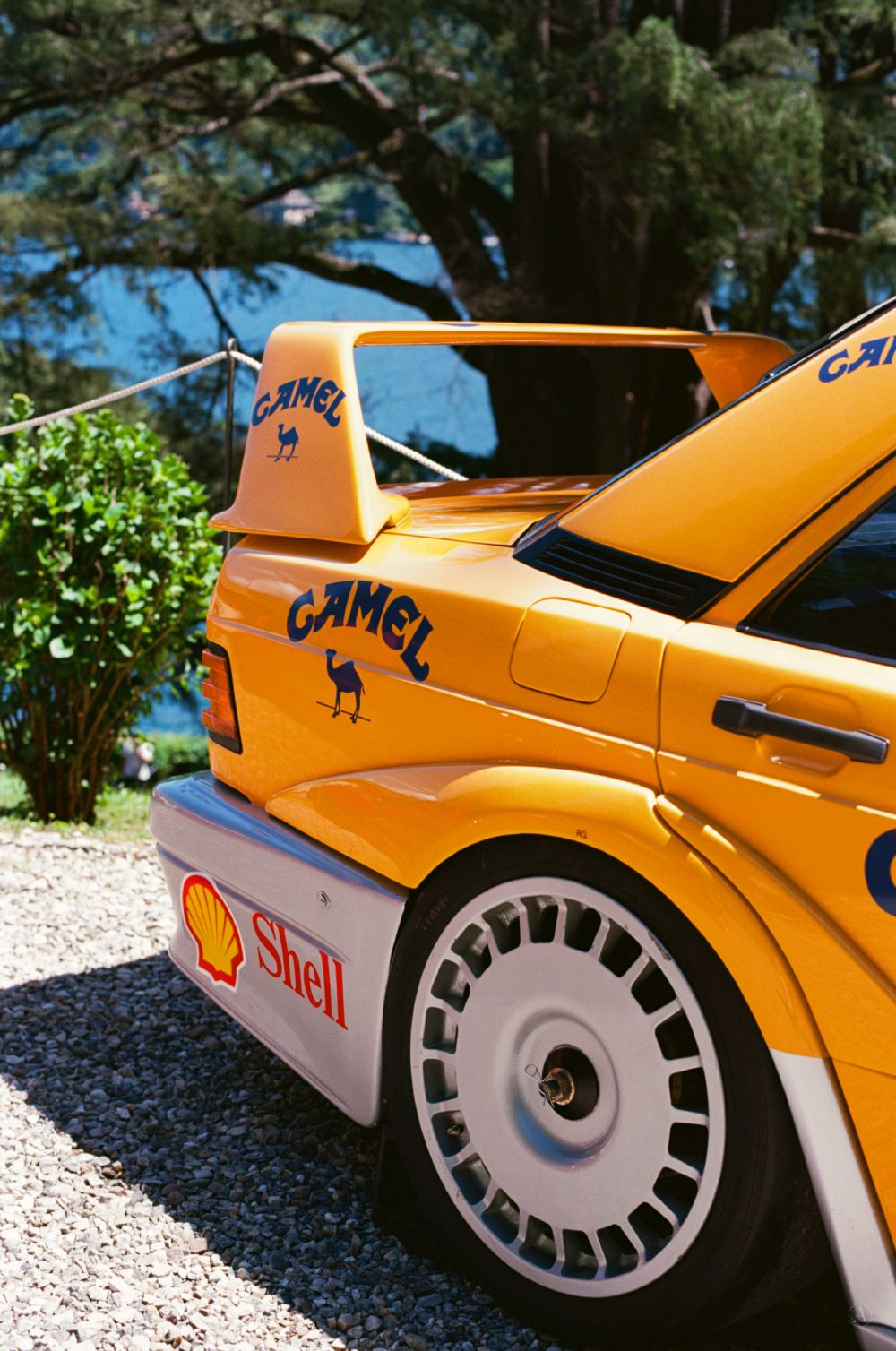
Walk up the hillside, and the crunch of gravel beneath your boots is not accompanied by panicked handlers or a strict dress code. The atmosphere feels prestigious, certainly, but remarkably healthy and relaxed. It is a rare environment where a seasoned collector can fiercely debate the homologation history of a Porsche 917 LH, while a newcomer can simply sit on the grass, negroni in hand, and take in the brutalist, aero-clad lines of a Mercedes-Benz 190E Evo against the lapping water.
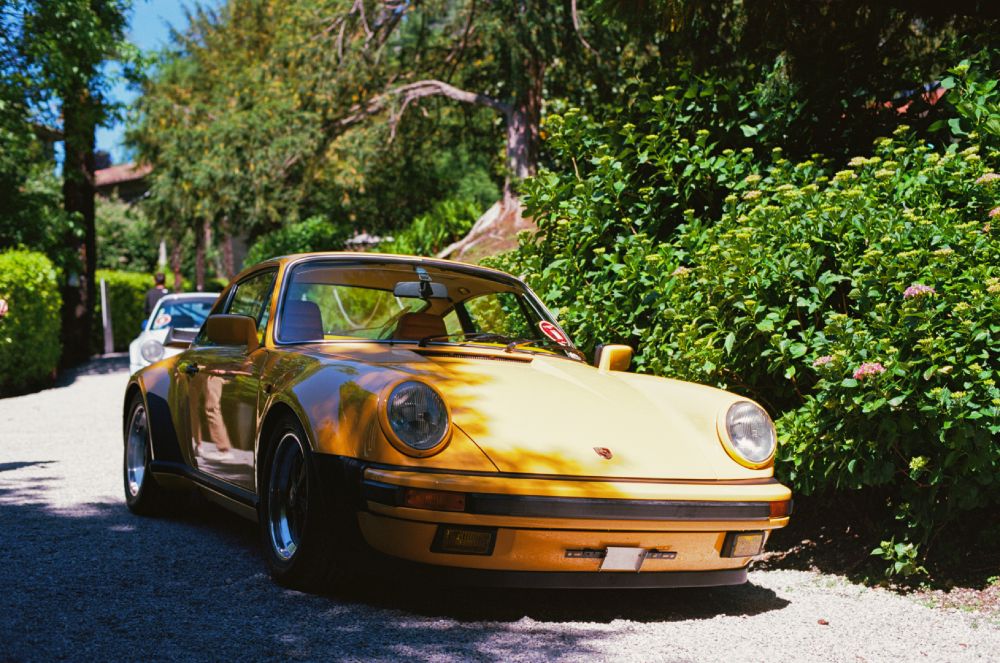
Rather than being parked in sterile, class-judged rows, the cars were deliberately dotted through the sprawling, seventeenth-century gardens. The juxtaposition was staggering: cold, clinical German steel framed by lush Italian botanicals and neo-classical architecture.
When lost in the beauty of the grounds, it is easy to overlook the sheer physical logistics required to curate this mechanical art gallery. To achieve the perfect composition on these terraced lakeside hills, several of these irreplaceable machines literally had to be craned into place. Watching homologation royalty suspended purely by tension cables, swinging gently in the breeze over a 300-year-old stone balustrade, is a surreal sight. It requires a level of calculated precision that felt entirely appropriate for a German-themed event.
Engineering as Art: The Hero Machines
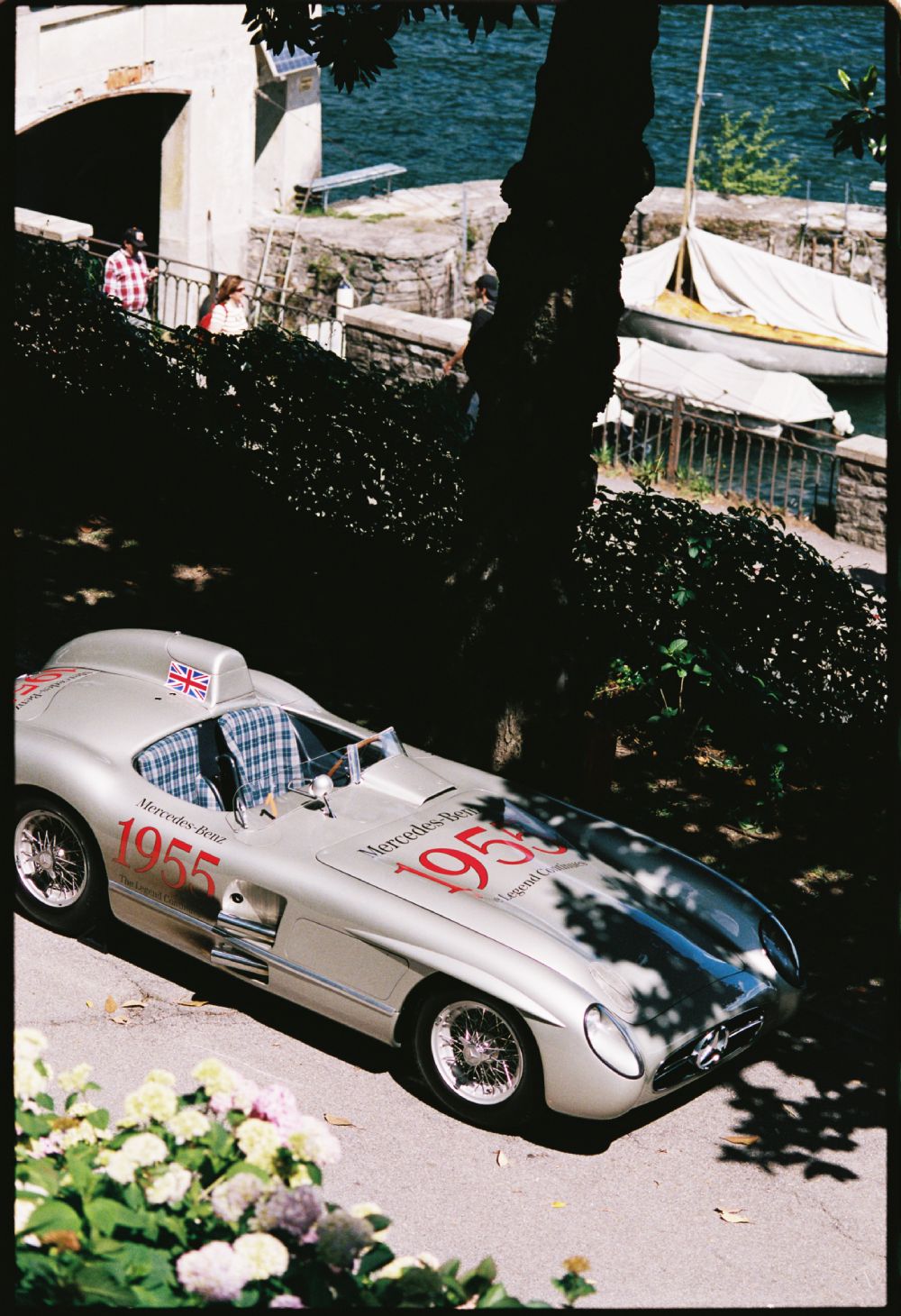
To line the entranceway, Mercedes raided their private collection, bringing the types of cars that money simply cannot buy. Among them was a machine of profound triumph and devastating tragedy: the 1955 W196S 300 SLR.
In 1955, Stirling Moss piloted a 300 SLR to victory at the Mille Miglia, setting the event record at an average of 97.96 mph over 990 miles. The 300 SLR was an unstoppable force, securing a 1-2-3 sweep at the Tourist Trophy at Dundrod, a 1-2 at the Targa Florio, and a non-championship 1-2 at the Eifelrennen, ultimately earning Mercedes the 1955 World Sportscar Championship.
However, this dominant season was scarred by tragedy. During the 24 Hours of Le Mans in June of that year, a 300 SLR driven by Pierre Levegh rear-ended an Austin-Healey, causing his car to become airborne. Upon impact, the ultra-lightweight Elektron bodywork’s high magnesium content caused it to ignite in the ensuing fuel fire. Compounding the disaster, the fire crew initially tried to extinguish the flames with water, only making the magnesium burn hotter. Eighty-four spectators and Levegh lost their lives in what remains the highest-fatality accident in the history of motorsport.
Such was the calamity of the incident that Mercedes pulled out of racing for 30 years.
While the famed #722 chassis remains locked up in Stuttgart, a sister chassis W196S 300 SLR graced the main drive of Villa Del Grumello.
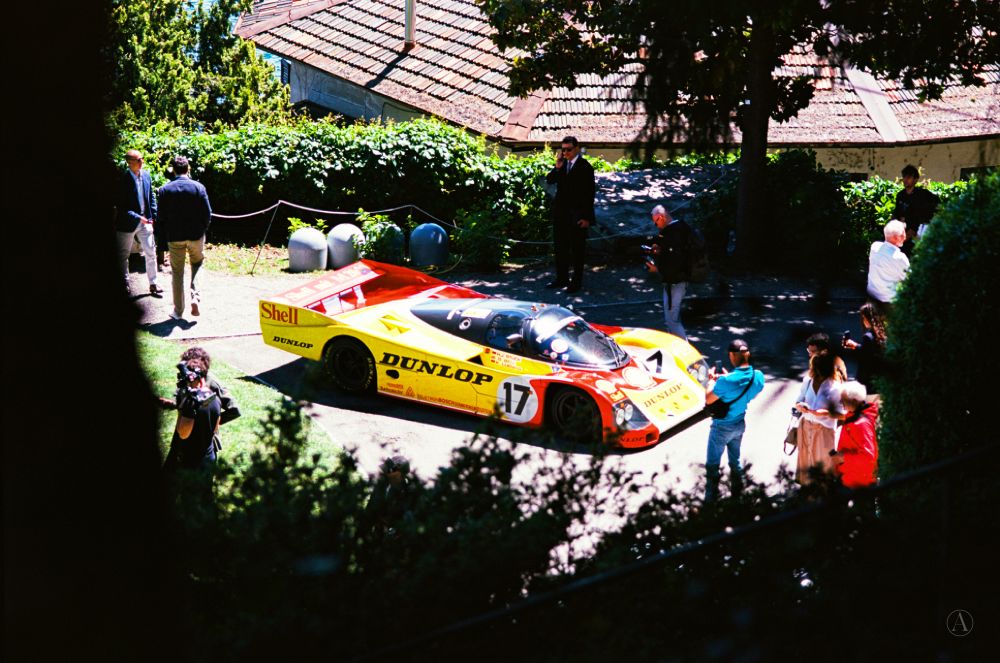
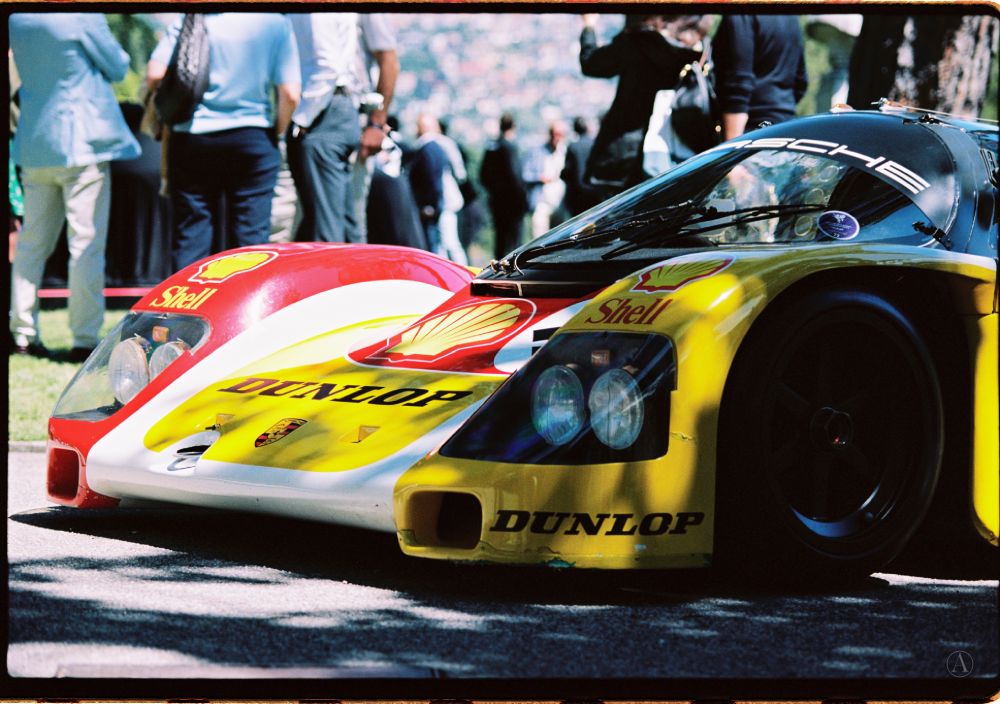
Keeping in Stuttgart, another standout at the show was chassis 962-010—the ultimate, final Works evolution of arguably the greatest endurance racing platform in motorsport history.
Porsche was notably absent from the rest of the 1988 season, focusing their factory efforts entirely on Le Mans and building this specific chassis—the last Works 962—to an ultimate spec purely to secure their seventh consecutive title. The 1988 Le Mans was a battle of philosophies: the screaming, naturally aspirated 7.0-litre V12s of the British Jaguars against the disciplined, twin-turbocharged 3.0-litre flat-six of the German Porsches.
Chassis 962-010 led the charge, but driver Klaus Ludwig ignored instructions to pit for fuel, ironically running dry at the Porsche Curves. Despite managing to drag the car back to the pitlane using the starter motor, two laps were lost. A phenomenal redemption drive followed, with 962-010 fighting back to finish on the lead lap in second place.
Today, 962-010 remains in exceptional, original condition. Looking closely, you don’t see perfection—you see history. It lives in the battle-scarred carbon-Kevlar weave, the stone chips earned at 242.9 mph on the Mulsanne Straight, and the faded sponsor decals. It is perfectly imperfect.
Conclusion: The Analogue Takeaway
In an era where automotive performance is increasingly digitised, events like KraftMeister and Villa d’Este feel like vital anchors to reality.
We need the romance and the champagne of Villa d’Este to remind us of the automobile’s capacity for sheer, artistic beauty. But we also need the relaxed, grassy terraces of FuoriConcorso to remind us of the visceral, brutal history of engineering. These German machines, from the tragic bravery of the 300 SLR to the turbocharged dominance of the 962, demand a different kind of respect. Taking them in on the shores of Lake Como, captured entirely on analogue film, reminds us why we love this physical world in the first place.
So, it begs the question: If you had the keys to the Villa del Grumello gates, what ultimate German classic would you crane onto the grass?
Discover more about the event and explore future lakeside exhibitions by visiting the official FuoriConcorso website.
Photographer’s Notes: The Como Kit
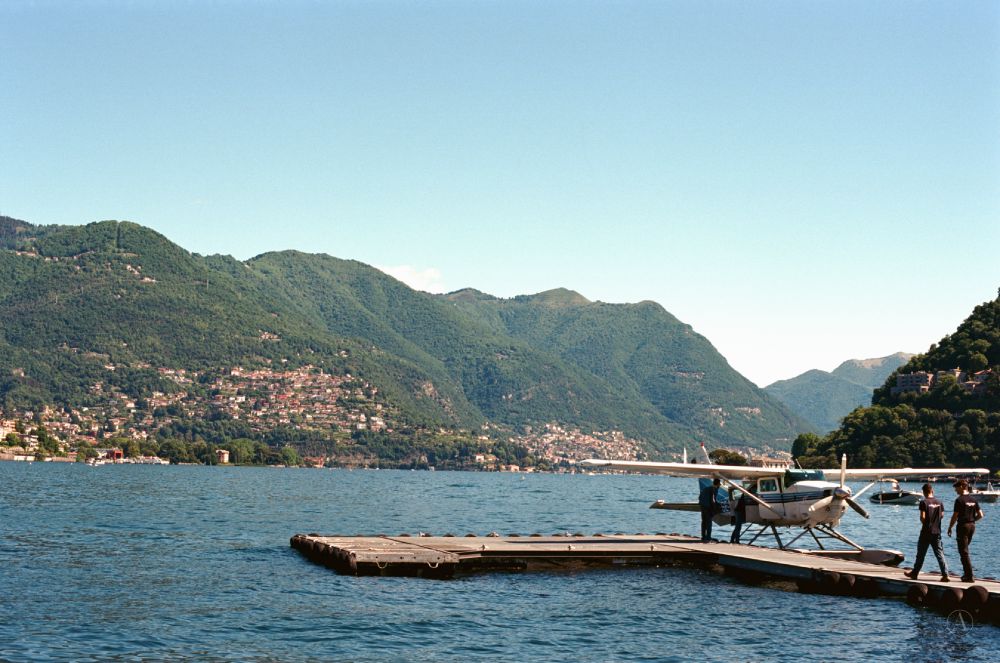
All photography captured on 35mm film.
| The Kit | Equipment Selected |
|---|---|
| The Cameras | Nikon F5 & Nikon F2 |
| The Glass | 28mm f/2.8D, 50mm f/1.4D, 105mm Micro |
| Film Stock | Kodak Ektar 100, Portra 160, Portra 400, Vision3 200D |
| Scanning | Portra scanned on Fuji Frontier SP3000, Ektar and 200D on Noritsu HS1800 |